

2JZ – Toyota Supra, Aristo & Lexus IS300 Head Gasket Keychain
Engine Identity
The Toyota 2JZ-GTE is an inline-six, twin-turbocharged, 3.0-litre (2,997 cc) gasoline engine designed and manufactured by Toyota Motor Corporation. It belongs to the JZ family of engines — Toyota's replacement for the earlier M-series inline-six — and is designated as a cast-iron block, aluminium cylinder head, DOHC 24-valve unit with sequential twin turbochargers. The engine code breaks down as follows: 2 = second generation of the JZ series; J = JZ family; Z = a designation used for inline-sixes in this family; G = performance/dual overhead camshaft configuration; T = turbocharged; E = electronic fuel injection.
Vehicle Compatibility Matrix
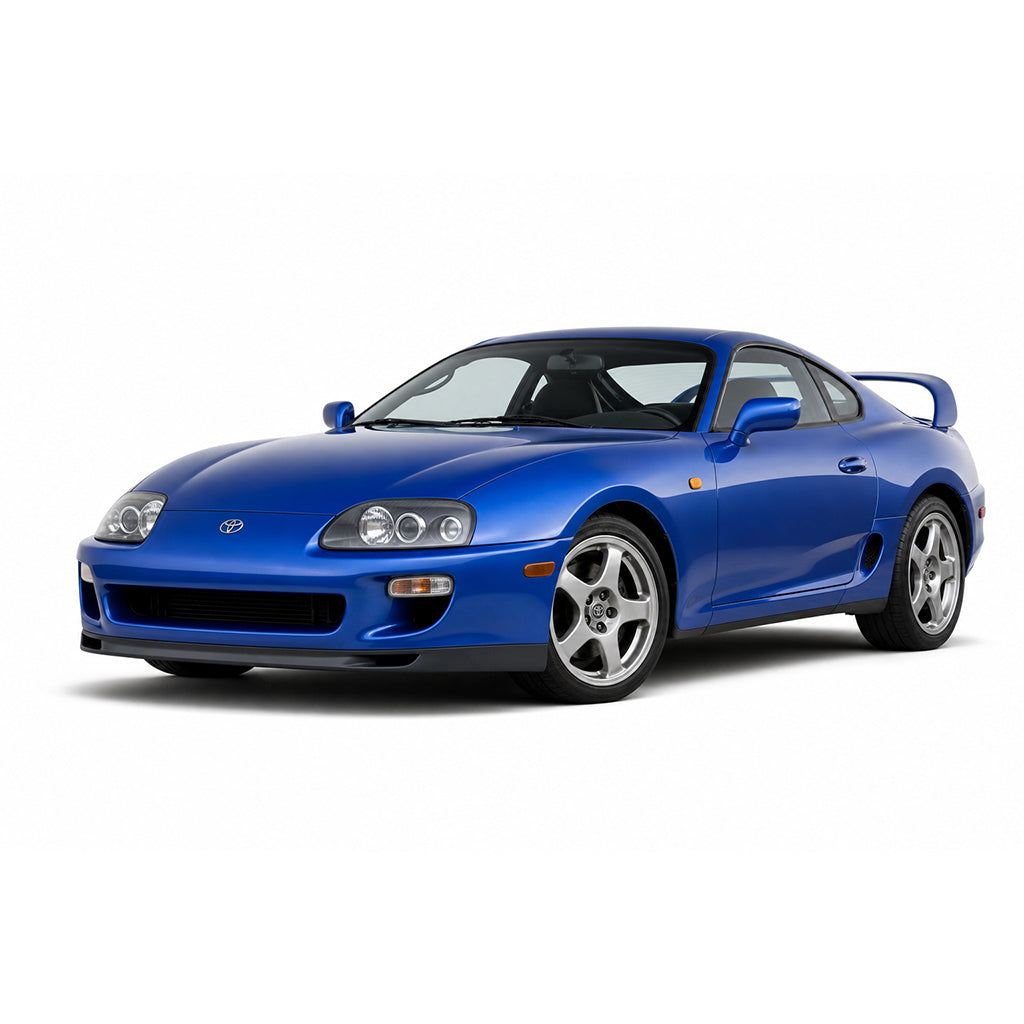
The 2JZ-GTE was fitted to only three original-equipment factory vehicles, all rear-wheel-drive platforms:
The Toyota Aristo was sold in export markets as the Lexus GS300 (fitted with the naturally aspirated 2JZ-GE, not the GTE). The Supra JZA80 is the sole export vehicle to have left the factory with the twin-turbo GTE variant. The Aristo JZS147 was first delivered in October 1991 and the JZS161 from August 1997 through to November 2004. The Supra JZA80 was produced from May 1993 to August 2002.
Why This Engine Matters
The 2JZ-GTE occupies a near-unique position in automotive history: an engine so overbuilt from the factory that it became the world's pre-eminent tuning platform for a generation of enthusiasts. Its cast-iron block with thick cylinder walls and fully counterweighted forged crankshaft meant stock internals could reliably support 700–800 hp before requiring serious internal reinforcement — a fact unmatched by virtually any other production engine of its era. It rose to global cultural prominence when it powered the orange Toyota Supra driven by Paul Walker's character Brian O'Conner in the 2001 film The Fast and the Furious, where it was immortalised with the in-film line: "2JZ engine… this will decimate all". Beyond pop culture, the engine became the weapon of choice on drag strips and Formula Drift circuits worldwide, with six-second quarter-mile passes and thousand-horsepower builds becoming almost routine.
Technical Specifications
The 2JZ-GTE debuted in 1991 without variable valve timing, and Toyota introduced VVT-i (Variable Valve Timing with intelligence) in September 1997 for the 1998 model year onwards. Both variants share the same displacement, bore, stroke, and bottom-end architecture.
Core Specifications
-
Configuration: Inline-6 (I6), longitudinal, rear-wheel-drive
-
Cylinder Block: Cast iron, closed-deck, semi-closed deck reinforcement
-
Valvetrain: 24 valves (4 per cylinder), belt-driven camshafts
-
Turbochargers: Sequential twin-turbo; Japanese-market models used CT20 ceramic-wheel turbos; export models used stainless steel CT12B turbos with larger 550 cc/min injectors (vs. 440 cc/min JDM)
-
Cooling: Liquid-cooled; oil spray nozzles cool the piston crowns
Power Output
-
JDM (Japan): Officially quoted at 280 PS (206 kW / 276 hp) at 5,600 rpm due to Japan's voluntary Gentlemen's Agreement horsepower ceiling; true output was documented closer to 318–320 PS
-
Export (North America / Europe): Toyota documented 320 hp (239 kW / 324 PS) at 5,600 rpm
-
Torque (VVT-i): 451 N·m (333 lb·ft) at 3,600 rpm
Notable Variants
The non-VVT-i is preferred by some tuners for its simpler ignition architecture (coil-on-plug vs. wasted spark on VVT-i) and more direct power delivery. The VVT-i offers noticeably better turbo spool — around 500 rpm earlier — and a broader, more usable torque curve at street driving speeds.
Available Gearboxes
-
Toyota A340E 4-speed automatic
-
Toyota V160 / V161 6-speed manual (co-developed with Getrag as the Type 233)
Tuning & Aftermarket Potential
The 2JZ-GTE's reputation rests on one extraordinary fact: with only bolt-on modifications (single larger turbo, upgraded injectors, aftermarket intercooler, and an ECU remap), output can reliably double to around 700 hp on the stock internal components. The forged crankshaft, thick main bearing journals, and piston oil-spray cooling all contribute to this resilience. With a full build replacing the internals, outputs exceeding 1,500 hp have been documented, and drag racing machines have been built above 2,000 hp. The aftermarket ecosystem is one of the deepest of any engine in history, with complete availability of billet blocks, stroker kits (the popular 3.4-litre stroker conversion extends the stroke to achieve approximately 3,386 cc), forged internals, and single-turbo conversion kits from brands including HKS, Garrett, and Precision Turbo.
The 2JZ-GTE's physical dimensions and its longitudinal rear-wheel-drive mounting configuration have also made it a popular engine swap candidate into platforms ranging from the Nissan S-chassis (240SX / Silvia), BMW 3 Series, and even classic American trucks.
Product Details — Gasket Keys Stainless Steel Keychain
The Gasket Keys Toyota 2JZ-GTE keychain is precision-cut from the actual head gasket profile of this iconic engine. Each keychain is manufactured in stainless steel and finished through a three-stage vibratory polishing process, producing a smooth, corrosion-resistant surface that honours the industrial precision of the original component. The keychain ships presented on a plywood display card, making it suitable for gifting to Supra owners, Aristo enthusiasts, JDM collectors, and tuning culture fans alike.
FAQ
What vehicles used the 2JZ-GTE engine?
The 2JZ-GTE was fitted from the factory to three vehicles: the Toyota Supra RZ/Turbo (JZA80, 1993–2002), the Toyota Aristo 3.0V (JZS147, 1991–1997, Japan-only), and the Toyota Aristo V300 (JZS161, 1997–2004, Japan-only). The Supra JZA80 is the only model sold new in the UK and Europe with this engine.
What if I don't know my engine code — will this fit the standard Supra or Aristo?
Yes. If you own a fourth-generation Toyota Supra (1993–2002) with the twin-turbo engine, or a first- or second-generation Toyota Aristo (1991–2004) with the 3.0 Twin Turbo badge (Japan-import), your car is powered by a 2JZ-GTE. The naturally aspirated Supra (non-turbo) and Lexus GS300/IS300 use the 2JZ-GE variant; Gasket Keys produces a separate keychain for that engine.
Why is the 2JZ-GTE considered the greatest tuner engine ever made?
Toyota engineered the 2JZ-GTE with a cast-iron block, forged crankshaft, and piston oil-cooling jets that give it structural integrity far beyond its factory power output. Stock internals reliably support 700–800 hp, and with a full rebuild, outputs exceeding 1,500 hp have been achieved. This extreme over-engineering, combined with deep aftermarket support and its starring role in The Fast and the Furious franchise, cemented it as the definitive Japanese performance engine of the 1990s.